



Individually wrapped units
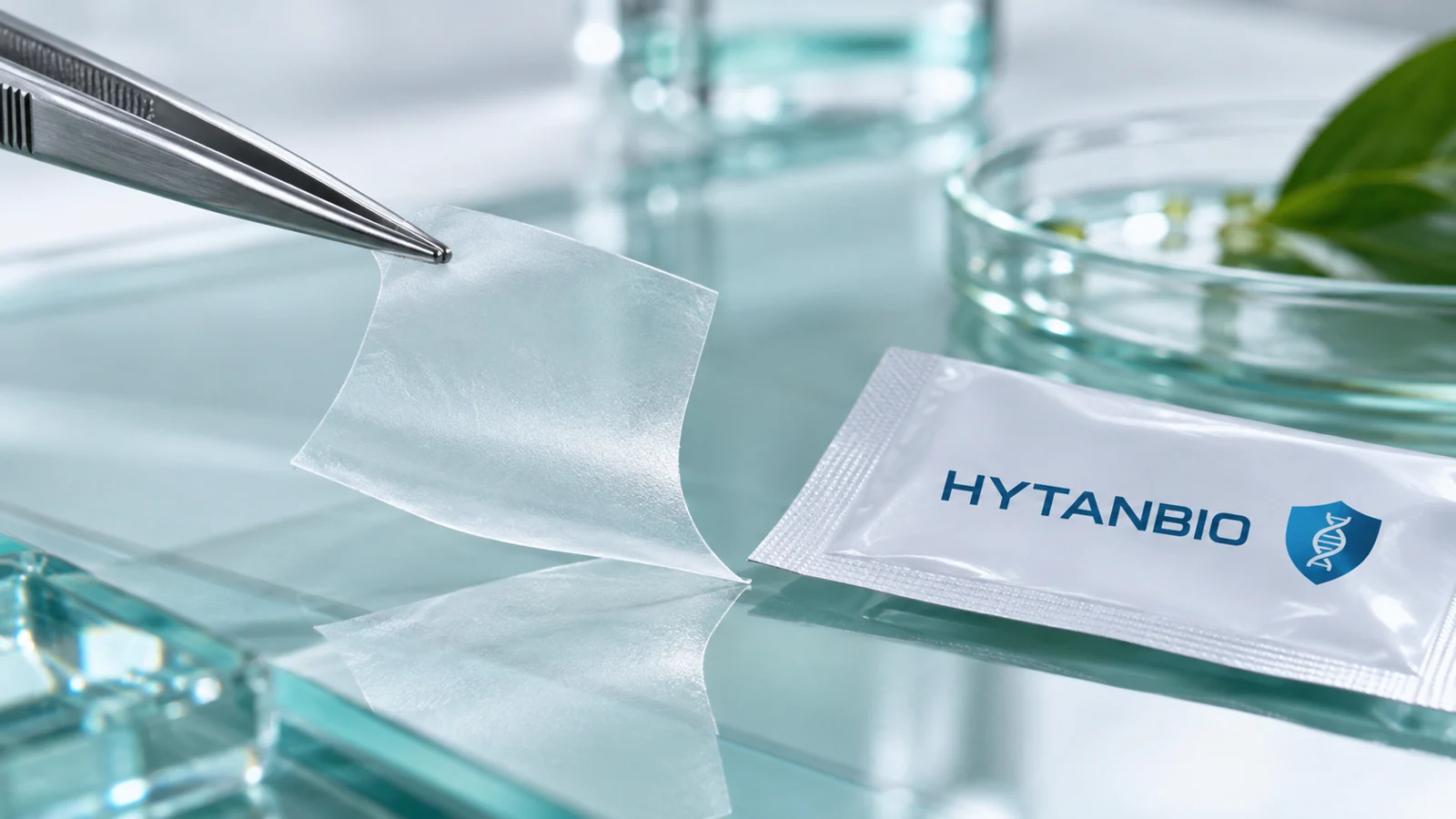
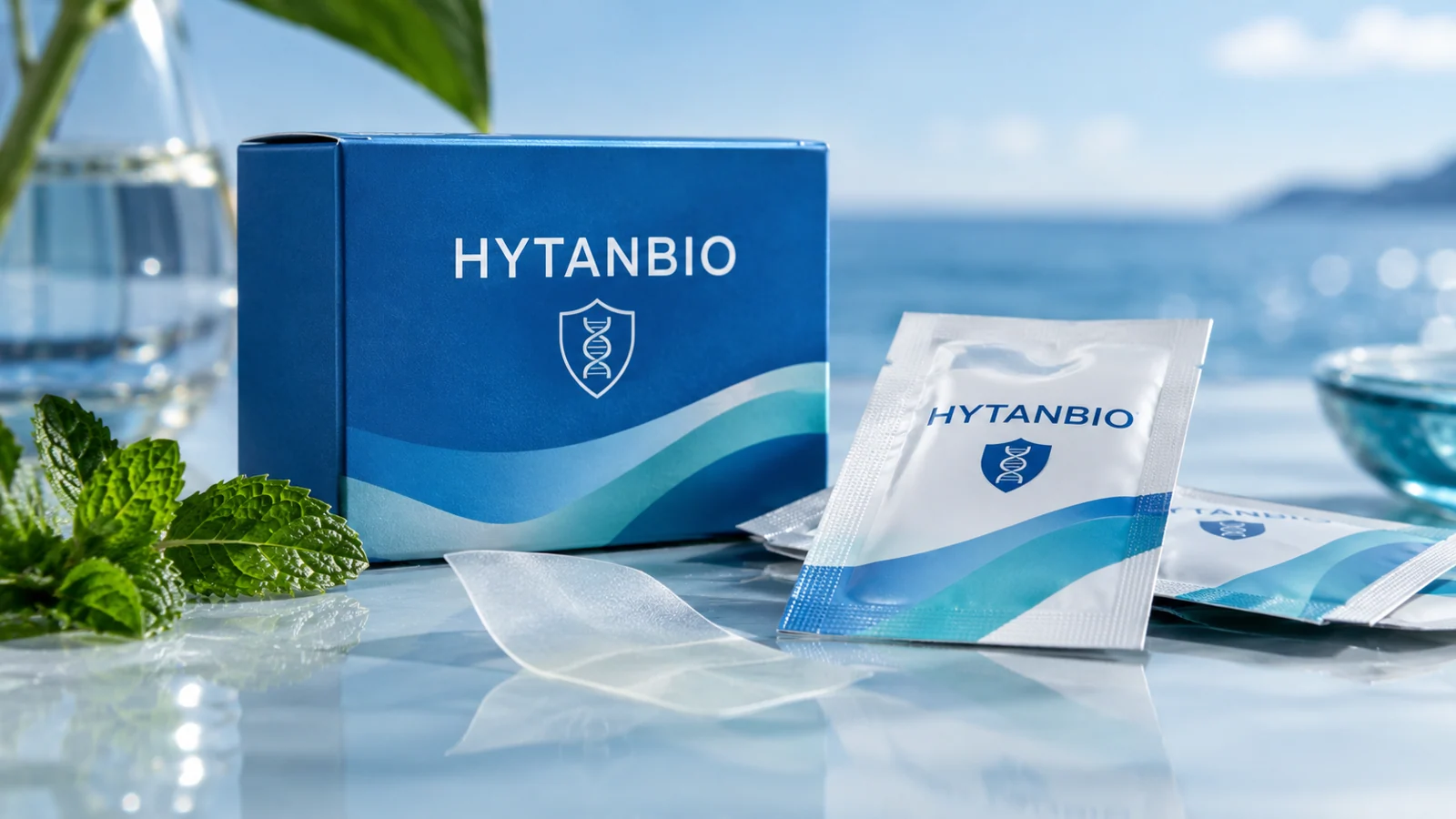
Thin films can fit convenient sachets. The brochure references approximately 0.08 mm average thickness; actual specification is project-dependent.
Convenience, portability and sensory experience should be assessed separately from absorption or clinical claims.
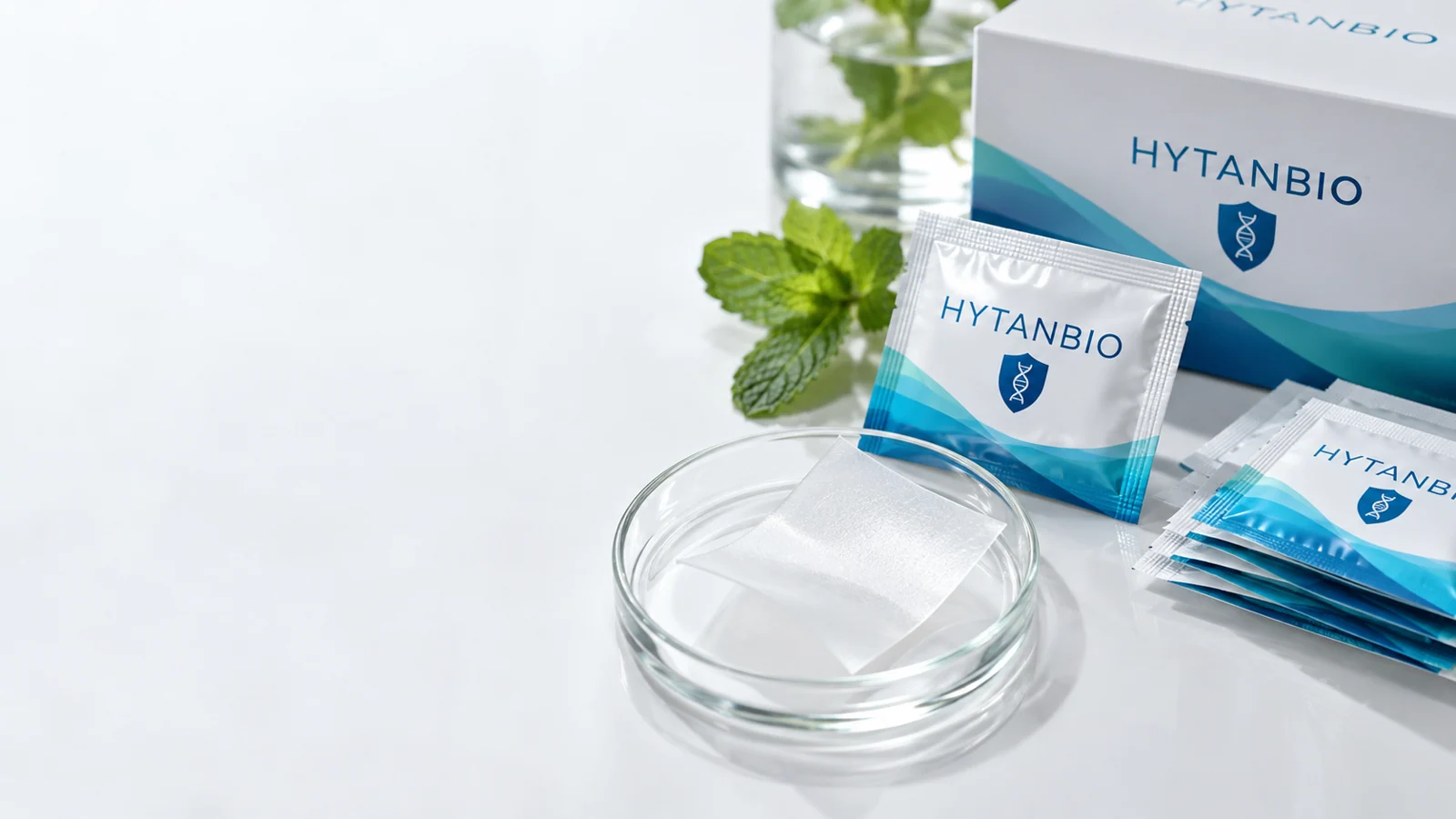
Thin films can fit convenient sachets. The brochure references approximately 0.08 mm average thickness; actual specification is project-dependent.
A properly designed film can reduce conventional swallowing requirements and be developed for use without water.
Fruit and mint systems can be evaluated for a pleasant finished-film experience.
Disintegration does not establish mucosal absorption, universal bioavailability or a guaranteed onset time.
A small sheet has practical loading limits. Minerals, protein and gram-level sports ingredients need explicit feasibility review.
Children, pregnancy, older adults and medicinal projects need appropriate assessment of the exact finished product.
Scientific review of buccal film formulations and evaluation approaches
The source brochure presents the following format comparisons. These are source statements, not measured results for every HYTANBIO product direction. A finished-product assessment determines which statements can be substantiated.
| Brochure comparison | Source statement | Project interpretation |
|---|---|---|
| Bioavailability | Oral film 50–80%; gummy 20–40%; capsule 15–30%; tablet 10–25% | The brochure calls these common industry observations and notes formulation and individual variation. They are not a universal ranking or portfolio performance specification. |
| Absorption speed | Oral film described as fast; other listed forms described as slow | Disintegration, dissolution, exposure and clinical response are different endpoints. Compare the exact active and finished formula. |
| Swallowing and use | Oral film described as dissolving in the mouth without water; capsules and tablets used with water | Confirm the actual use instructions and intended audience. Suitability for swallowing difficulties requires product-specific review. |
| Gastrointestinal burden | Brochure lists none for oral film and present for other forms | A sheet may release material that is swallowed. The format does not establish absence of gastrointestinal effects. |
| Mucosal delivery and first-pass effects | Brochure describes absorption through oral mucosa and bypass of gastrointestinal and liver first-pass effects | These outcomes require evidence for the active, formulation and route. They cannot be inferred from a dissolving film alone. |
| Onset | Brochure references 5–10 minutes | No product-specific clinical onset result is supplied for the portfolio. Do not use this range as a guaranteed product claim. |
Share your ingredients, target market, packaging and expected volume.
These are finished-formula requirements, not properties of every oral film. Review all actives, carriers, flavor ingredients and processing aids against the intended definition. A vegan brief should review collagen and other animal-derived ingredients. Gluten-free and allergen wording requires supplier evidence, manufacturing controls and appropriate finished-product review. Confirm sugar content and the destination-market labeling criteria before approving a sugar-free statement.
Portable oral strips and individually wrapped packs can support a compact, on-the-go format. No-water use, handling and dissolution must be supported by the agreed product design. Audience-specific formulas still require ingredient quantity, suitability and label review; convenience does not establish that one formula is suitable for all ages or situations.
ODF refers to an orodispersible or oral dissolving film format. A medicinal product and a nutrition product can share a physical format while following different development and authorization pathways. Instructions, unit quantities and any dosage guide must follow the actual approved specification and lawful final label. This portfolio does not establish a universal consumer dose.